
Best Off-Season Garage Projects for Classic Car Owners
The car is stored, the show season is over, and the garage is quiet. Here's how to spend that downtime on upgrades you'll actually notice come spring.
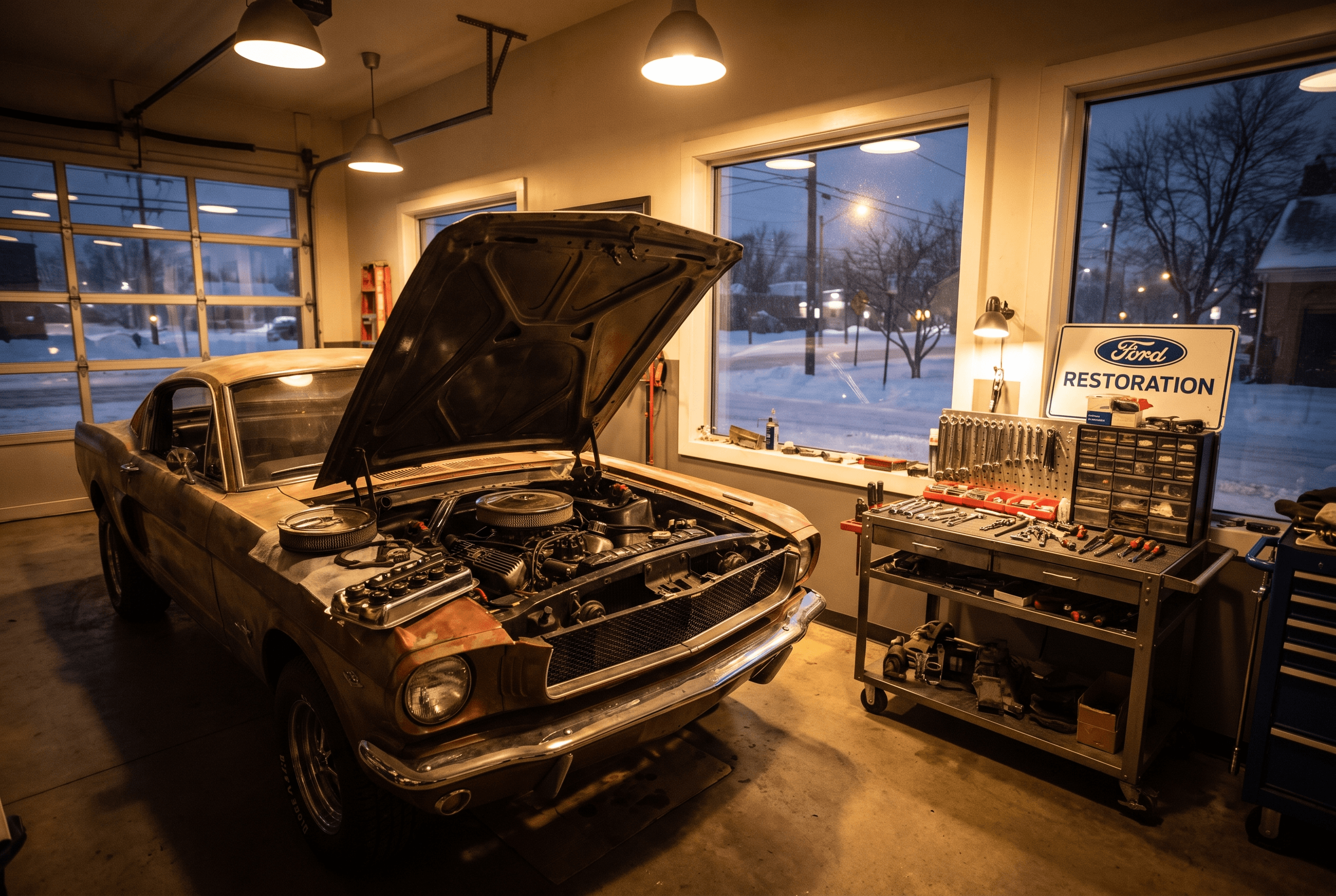
Once a classic is winterized and covered, most owners treat the garage as closed for the season, check the battery tender once a month and wait for spring. That's a missed window. The car isn't going anywhere for the next several months, which makes this the single best stretch of the year to tackle upgrades that are miserable to do when you're trying to squeeze in a Saturday before a show.
None of the projects below require pulling the engine or a full teardown. They're the kind of work that's easy to postpone indefinitely once show season starts again, better lighting, tighter suspension, a cleaner-looking interior, gauges that read right, so winter is when they actually get done. Here's where to spend your time and money.
1. LED Lighting Upgrades
Lighting is the highest-visibility, lowest-labor project on this list, most swaps are a bulb change with no wiring modification. Start with the headlights: if your classic runs old-style sealed beams, direct-fit LED sealed beam headlight conversion kits exist for the common 5.75", 7" round, and rectangular sizes, generally $100-$400 a pair depending on brand and DOT/SAE certification. Look specifically for kits that list SAE or DOT certification, since headlight legality is regulated at the state level and an uncertified kit can fail inspection in states that check for it.
Inside the cabin, dash and dome lighting is a cheap, satisfying win. Swapping factory incandescent bulbs for LED interior bulb kits brightens gauges and map lights immediately, and stock 1157- and 194-style sockets used in taillights and turn signals have direct LED replacements. A word of caution: some LED replacement bulbs flash faster than stock incandescents in turn signal circuits because they draw less current, that's a normal side effect of the lower load, not a wiring fault, and it's usually solved with an LED-compatible flasher relay rather than rewiring anything.
2. Replace Worn Suspension Bushings
If the car has any age on the original rubber, control arm, sway bar, and body mount bushings are likely dried out, cracked, or compressed, even if the car has low miles, rubber degrades from age and heat cycling as much as from use. Winter storage is the ideal time to do this because the car doesn't need to move under its own power for you to work on it.
Polyurethane bushing kits from brands like Energy Suspension and Prothane run roughly $100 for a basic mount set up to $400+ for a full-vehicle kit, and they tighten up handling noticeably by eliminating the flex that stock rubber allows. That said, polyurethane isn't silent, it transmits more road noise and vibration than rubber, so if your priority is ride comfort over handling feel, replacing worn bushings with new OEM-style rubber is the better call. Either way, a proper ball joint and bushing press tool kit makes the job dramatically easier than trying to hammer old bushings out cold.
3. Clean and Restore the Gauge Cluster
Foggy gauge lenses, sticky needles, and dim backlighting are easy to live with once you're used to them, and easy to fix once the car isn't going anywhere. Pull the cluster and start with the basics: electrical contact cleaner on the voltage regulator contacts and bulb sockets resolves a surprising number of "dead" or flickering gauges that aren't actually broken, just corroded. A plastic polish kit brings hazy lenses back to clear.
For gauges that read wrong rather than just look dirty, sticky needles, a speedometer that lags, an inaccurate fuel gauge, that's a job for a specialty instrument shop rather than a DIY fix. Individual gauge cleaning and calibration typically runs $90-$250 per gauge depending on the shop and issue, while a full cluster restoration (disassembly, needle replacement, face refinishing, recalibration) can run anywhere from a few hundred dollars to $1,800 or more for a complex cluster. Get a quote before committing, prices vary widely by shop and how far gone the cluster is.
4. Refresh the Interior
Interior work is where winter downtime pays off the most, because most of it requires the car to sit still for days at a time. A few projects worth tackling in order of effort:
- Seat foam and padding. Sagging, cracked foam is one of the biggest giveaways of an unrestored interior. replacement seat foam is inexpensive relative to full reupholstery and makes worn original seats look and feel dramatically better.
- Headliner. A drooping headliner is a common cosmetic issue on older cars. headliner installation adhesive paired with a new headliner panel is a manageable weekend project with the seats out of the way.
- Weatherstripping. Dried, compressed door and trunk seals let in wind noise, dust, and water. door and trunk weatherstripping kits from suppliers like Metro Moulded run roughly $150-$850+ depending on whether you're doing a full car or just the doors, and fresh seals noticeably quiet the cabin.
- Carpet and upholstery cleaning. A thorough deep clean with a proper upholstery and carpet cleaner resets the interior for spring without the cost of replacing anything.
5. Add Sound Deadening
If road noise, drone, or heat coming through the floor has bugged you all season, winter is the time to address it, doors, floors, and trunk panels all need to come out of the car anyway for the interior work above, so it's an efficient add-on rather than a separate teardown. Dynamat sound deadening kits run from around $240 for a bulk pack up to $500 for a full-coverage kit, and are sold in vehicle-specific custom-cut kits for many popular classics that eliminate the guesswork of cutting sheets to fit. Planning a stereo upgrade too? Our guide to hidden audio upgrades for classic cars covers speakers and amps that fit without cutting.
6. Clean Up Small Wiring and Electrical Issues
A full harness replacement is a major, vehicle-specific project, complete kits from suppliers like American Autowire commonly run $800-$1,800+ depending on the application, and it's not a realistic winter side project unless that's the entire plan for the season. But most cars don't need a full harness, they need the small stuff addressed: corroded ground straps, brittle connector insulation, and dim lighting from voltage drop at old connections.
Pull connectors at the headlights, taillights, and fuse box and check for green or white corrosion. Clean contacts with electrical contact cleaner, apply dielectric grease to keep moisture out going forward, and wrap any brittle or exposed wiring in new wire loom or split loom tubing. A basic automotive multimeter makes it easy to confirm you're actually getting full voltage to a given circuit rather than guessing from how bright a bulb looks.
Budgeting the Winter: Three Tiers
Not every winter needs to be a big spend. Roughly:
- Under $150: Interior LED bulbs, gauge lens polish and contact cleaner, dielectric grease and wire loom for a few problem connectors, carpet and upholstery cleaning.
- $150-$600: A headlight LED conversion kit, a partial bushing kit (front end or sway bar only), a weatherstripping kit for the doors, or a mid-size Dynamat kit for the floor and trunk.
- $600+: A full-vehicle bushing kit, professional gauge cluster restoration, a complete weatherstripping and sound deadening pass, or seat foam plus new headliner done together while the interior is already apart.
None of these require the car to run, which is exactly why they belong on the winter list rather than the show-season list. Save the mechanical work that requires a warm engine and dry pavement, brake bleeding, alignment, road testing, for when the weather actually cooperates.
Frequently Asked Questions
Can I do these projects if my car is in outdoor or unheated storage?
Most of them, yes, though interior work and adhesive-based jobs like headliners go much better above roughly 60°F, since foam, adhesives, and vinyl get stiff and hard to work in cold air. If your garage is unheated, a portable space heater run safely away from any solvents or fuel vapor makes a real difference on interior days.
Will polyurethane bushings make my classic ride worse?
They'll transmit more road noise and minor vibration than the factory rubber did, that's the tradeoff for tighter, more precise handling. If your car is more of a comfortable cruiser than a corner-carver, replacing worn bushings with new rubber rather than polyurethane keeps the factory ride character.
Are LED headlight conversions legal for classic cars?
It depends on your state, and rules do vary and change, so check your state's current vehicle equipment regulations before installing one. Sticking to kits with SAE or DOT certification is the safer route regardless of where you live, since that's frequently what inspection stations and law enforcement check for.
Is it worth restoring a gauge cluster on a car that isn't a full numbers-matching restoration?
Often, yes. Even a basic cleaning and contact service resolves a lot of "broken" gauge complaints for relatively little money, and it's the kind of detail judges and fellow owners notice up close at a show even on a driver-quality car.
How long should I budget for a full interior refresh over the winter?
For a DIY seat foam, headliner, and weatherstripping pass, plan on several weekends rather than one, mainly because adhesives and foam need cure time between steps. Rushing the headliner in particular tends to show in the finished result.
Ready for Spring
The projects above are the ones that actually get skipped once show season starts back up, so winter is when they get crossed off. When the car comes back out, put the improvements to work: browse upcoming car shows or check what's happening near you this weekend to plan its first outing, and if you're also refreshing the exterior, our guide to detailing products for show-ready paint covers the products worth having on hand once the weather turns.
Keep Reading
Find Your Next Car Show
Browse hundreds of upcoming shows, cruise-ins, and meets near you.
Browse Events