
How to Winterize a Classic Car: A Step-by-Step Storage Guide
How you store your classic over the winter has a direct impact on how it starts and runs come spring. Here's the full storage checklist.
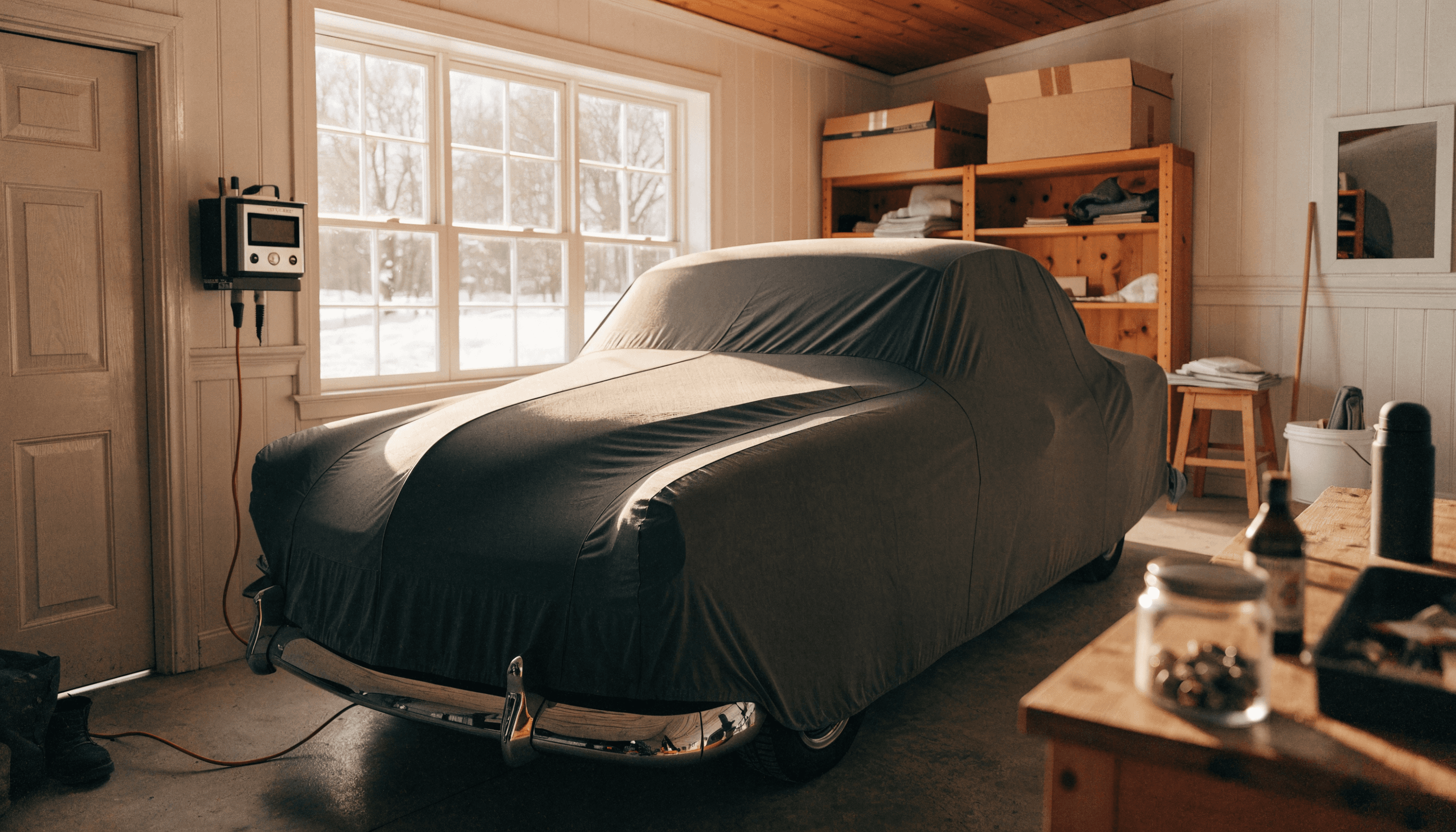
Car show season winds down as the weather turns, but the work isn't over, it just moves from the show field to the garage. How you store your classic over the winter has a direct impact on how it starts, runs, and looks when show season rolls back around. Skip a step and you could be facing a dead battery, a gummed-up fuel system, or flat-spotted tires next spring.
Not sure storage is even the right call this year? See our guide on selling a classic car before winter for how that decision, and the timing around it, actually shakes out. Otherwise, here's a complete walkthrough for putting your car to bed the right way.
1. Give It a Proper Wash and Wax First
Road grime, bug residue, and tree sap left on the paint over the winter can etch into the clear coat. Wash the car thoroughly, clay bar if it's been a while, and finish with a coat of wax or sealant for a protective barrier. Clean the wheel wells and undercarriage too, trapped moisture there is a common source of rust.
2. Change the Oil Before Storage, Not After
Used motor oil contains combustion byproducts and moisture that can corrode internal engine components if left sitting for months. Change the oil and filter right before storage so the engine is sitting with clean oil, not old oil, through the winter.
3. Stabilize the Fuel System
Ethanol-blended gas absorbs moisture and degrades over time, which can lead to varnish buildup in the fuel lines and carburetor. Fill the tank most of the way (this reduces condensation inside the tank), add a quality fuel stabilizer, and run the engine for 10-15 minutes so the treated fuel circulates through the entire system, not just the tank.
4. Protect the Battery
A battery left connected and unused will slowly drain and can freeze in cold temperatures once its charge drops too low. Either disconnect the battery entirely or, better, connect a smart battery tender/maintainer that keeps it topped off without overcharging all winter. Shopping for a classic instead of storing one? A cold battery is also one of the most useful diagnostic tools you have, see our winter inspection checklist for how to read it.
5. Deal with the Tires
Sitting in one position for months causes tires to flat-spot. A few ways to prevent it:
- Inflate tires 5-10 PSI above the normal recommended pressure to compensate for cold-weather pressure loss
- Use tire cradles or jack stands to take weight off the tires entirely, if you're storing long-term
- If neither is practical, plan to roll the car forward or backward a few feet every few weeks
6. Keep Pests Out
Mice and other rodents love a quiet, undisturbed cabin and engine bay. Steel wool stuffed into the exhaust tip and air intake (removed before starting the car again) blocks entry points. Dryer sheets or peppermint oil sachets placed around the interior are a low-effort deterrent rodents tend to avoid.
7. Protect the Interior
- Crack the windows slightly if storing in a humidity-controlled space to prevent musty odors (skip this if pests or moisture are a concern)
- Use a moisture absorber (silica gel packs or a dehumidifier bucket) inside the cabin
- Cover leather or vinyl seats to prevent cracking from temperature swings
8. Choose the Right Cover
If the car isn't in a fully enclosed, climate-controlled garage, a breathable indoor car cover prevents dust buildup without trapping moisture the way a tarp does. Avoid plastic covers, they trap condensation against the paint. Our car cover buying guide breaks down indoor vs outdoor fabrics and why fit matters more than price.
9. Check On It Periodically
Even a well-prepped car benefits from a monthly check-in: glance at tire pressure, confirm the battery tender is working, and look underneath for any signs of leaks or pest activity.
If you’re looking for something more productive than a monthly glance, see our guide to off-season garage projects for classic car owners for higher-value ways to spend that downtime.When to Winterize (Timing by Region)
The right week matters less than beating the first hard freeze and the first road salt. In the upper Midwest and Northeast, that usually means late October; in the mid-South you may get to Thanksgiving. The practical rule: winterize after your last show or fall cruise of the season, while daytime temps still make garage work pleasant. Putting it off until the first snowstorm is how steps get skipped. Check late-season events near you before you commit to a storage date, plenty of regions have October color-cruise shows worth staying road-ready for. Still showing during that stretch? See our guide to showing a classic in cool fall weather for what changes once temperatures drop.
The Cost of Doing It Right (vs. Not)
The full winterization list, stabilizer, oil change, battery maintainer, moisture control, cover, runs $150-$350 if you're starting from nothing, and under $75 a year once you own the gear. Compare that to what skipping it can cost: a cracked battery ($150-$300), a carb rebuild from varnished fuel ($300-$800), rodent-chewed wiring (often four figures on a classic), or flat-spotted bias-plys that never round out again. Storage prep is the cheapest insurance in the hobby. Shopping for someone who stores a classic? A smart battery maintainer tops the under-$50 list in our gift guide for car show enthusiasts.
Common Winterizing Mistakes
- Using a plastic tarp as a cover. It traps condensation against the paint and grinds grit into the clear coat every time it shifts. Breathable fabric only.
- Storing with an empty tank. Empty tanks breathe moist air all winter and rust from the inside. Mostly-full plus stabilizer is the right call.
- Starting it every few weeks "to keep it fresh." Short runs that never fully warm the engine create condensation in the oil and exhaust, worse than not starting it at all. Either drive it 30+ minutes on a dry day or leave it be.
- Forgetting the steel wool is in the exhaust. Leave a note on the steering wheel listing everything you need to undo in spring.
- Setting the parking brake. Pads and shoes can seize to drums/rotors over months. Use wheel chocks instead.
The Spring Wake-Up Checklist
Come March or April, reverse the process methodically:
- Pull the steel wool from the exhaust and intake, check your winter note
- Inspect the engine bay and cabin for rodent evidence before cranking anything
- Check fluids and look under the car for drips that developed over winter
- Reconnect or top off the battery, set tires back to normal pressure
- Start it, let it fully warm, then take a gentle 20-30 minute shakedown drive listening for anything new
- Wash off storage dust, and start picking your first shows of the season
Frequently Asked Questions
Should I start my classic car during winter storage?
Only if you can drive it long enough to fully warm the engine and exhaust on dry, salt-free roads. Idling in the garage for ten minutes does more harm than good, moisture from combustion condenses in the oil and exhaust instead of burning off.
Do I need a battery tender or can I just disconnect the battery?
Disconnecting works, but the battery will still self-discharge over a long winter and can freeze once depleted. A smart maintainer holds it at full charge safely and means the car is ready to crank in spring.
Is a heated garage necessary for classic car storage?
No, dry matters far more than warm. A clean, dry, unheated garage with moisture control beats a damp heated one. Big temperature swings with humidity are what cause condensation on metal surfaces.
How much does it cost to store a classic car for the winter?
At home: under $75/year once you own the gear. Paid indoor storage runs $75-$250/month depending on region and climate control, if you go that route, ask whether battery maintenance and periodic checks are included.
Ready for Next Season
A properly stored classic starts easier, runs cleaner, and looks better when the first shows of the season roll around. Speaking of which, start planning next season's shows now so you know exactly where you're headed once the car comes out of hibernation.
Keep Reading
Find Your Next Car Show
Browse hundreds of upcoming shows, cruise-ins, and meets near you.
Browse Events