
Car Cover Buying Guide: Indoor vs. Outdoor, Materials, and Getting the Fit Right
The wrong cover does more damage than no cover at all. Here's how to pick indoor vs outdoor, why breathability beats waterproofing, and what fit actually buys you.
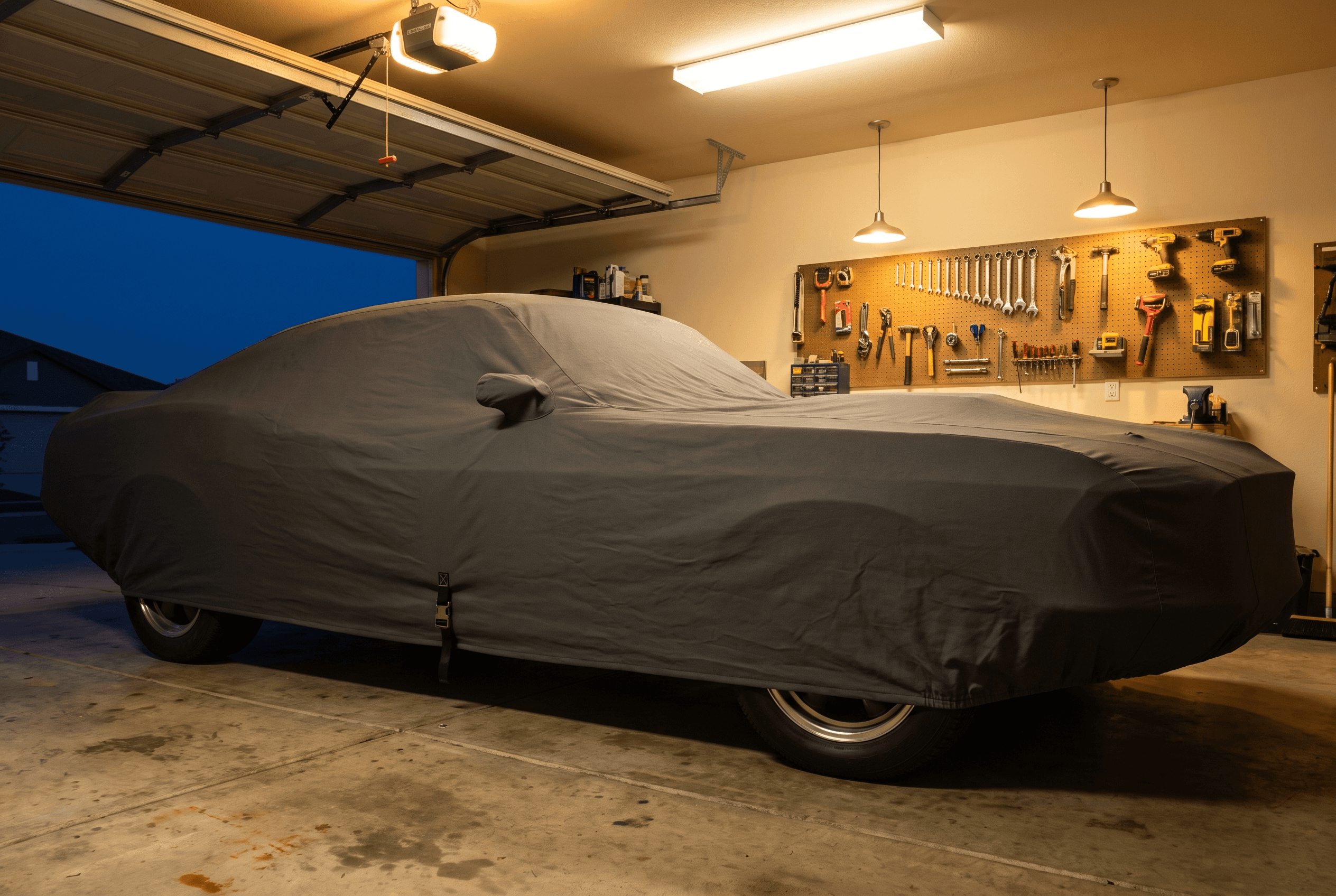
A car cover is one of the few pieces of gear that can actively make your paint worse. Buy the wrong one, or use the right one carelessly, and you'll spend next spring buffing out haze and fine scratches that weren't there in the fall. Buy the right one and it will keep dust, UV, tree sap, and bird droppings off a finish you spent real money on.
The decision comes down to three things, in this order: where the car actually sits, whether the fabric lets moisture out, and how closely it fits. Price matters far less than any of those. Here's how to get each one right.
Start With Where the Car Actually Sits
Indoor and outdoor covers are not the same product with different price tags, and using one in the other's job is the most common expensive mistake.
An indoor cover has one job: stop dust, and stop the garage door bumping, the recycling bin scraping, and the sleeve of your jacket dragging across a fender. It can be soft, thin, and stretchy because nothing is trying to soak it. Indoor fabrics are typically lightweight polyester, satin, or flannel, chosen for how they feel against clear coat rather than for weather resistance, so a soft breathable indoor car cover is what you want in a garage.
An outdoor cover has to handle rain, UV, and wind while still letting water vapour escape from underneath. That is a genuinely harder engineering problem, and it's why a good waterproof breathable outdoor car cover costs more and feels heavier. If your car lives in a garage, buying a heavy outdoor cover is not "extra protection", it's the wrong tool, and it makes the trapped-moisture problem worse.
If you're covering a car for the season rather than overnight, the cover is only one part of the job. Our winter storage guide covers fuel, battery, tires, and rodents, all of which will ruin your winter faster than dust will.
Breathability Beats Waterproofing
This is the part most buyers get backwards. A cover that blocks 100% of water and nothing else will trap the moisture that's already there, from humidity, from a damp floor, from the car being put away slightly wet. That trapped moisture sits against the paint and causes hazing, water spots that won't buff out, and eventually clear-coat damage. Mildew and a musty smell come along for free.
What you actually want outdoors is waterproof and breathable: rain stays out, vapour gets out. Indoors, you don't need waterproofing at all, and a waterproof cover in an enclosed space just makes trapped humidity more likely. A breathable cotton or soft synthetic indoor cover is the better choice in a garage.
The cheap blue plastic-backed tarps sold as "car covers" fail exactly here. They're waterproof and completely non-breathable, they hold water against the paint, and the coated surface is abrasive. If that's what's currently on your car, taking it off is an upgrade.
Never Cover a Dirty Car
A cover doesn't scratch paint. Grit trapped between the cover and the paint scratches paint, and then wind or handling moves the cover a few millimetres at a time and works that grit across the finish like very fine sandpaper.
This means two rules, and they matter more than which cover you buy:
- The car must be clean before it goes under. Covering a dusty car guarantees swirl marks. If the car is only lightly dusty and a full wash isn't practical, a quick detailer and plush microfiber towels takes five minutes and prevents the problem.
- The cover must be clean too. Covers collect grit on the inside over a season. Wash it per the manufacturer's instructions, most are machine washable on gentle with no fabric softener, and never put a cover back on the car after it's been dropped on a garage floor or a driveway.
If the paint already has swirls from a previous cover, that's a correction job, not a covering job. Our detailing product guide covers what actually removes them.
Fit: Universal, Semi-Custom, and Custom
Fit is not about looks. A loose cover moves in wind, and a cover that moves is a cover that abrades.
- Universal: one size covering a broad category like "midsize sedan". Cheapest, and the loosest. Acceptable for indoor dust duty on a car you're not precious about. Poor outdoors, because there's nothing stopping it flapping.
- Semi-custom: sized to a category but shaped closer to real body dimensions, often with an elasticised hem. A reasonable middle ground for a daily driver parked outside.
- Custom: cut from a pattern for your exact year, make, and model. Covercraft, for instance, makes covers to order from a library of more than 80,000 vehicle patterns, with mirror pockets on most applications and elastic hems front and rear. That's what makes a cover sit still.
For anything with paint you care about, especially a car that sits outdoors, custom fit is where the money is best spent. A custom-fit car cover for a specific model costs meaningfully more than a universal one, and the pricing varies enough by vehicle and fabric that it's worth pricing your exact model rather than trusting a general figure. Mirror pockets and a shaped nose are the details that stop the wind getting underneath.
Features Worth Paying For
- Soft inner lining: fleece or brushed lining on the surfaces that touch paint. Non-negotiable on a show car.
- Grommets and a tie-down cable: outdoors, a car cover cable and lock threaded through the grommets does two jobs, it stops wind lifting the cover and it discourages someone walking off with it.
- Gust straps or an underbody strap: car cover gust straps stop the cover ballooning in wind, worth having if the car sits outside in an exposed spot.
- Double-stitched or taped seams: seams are where outdoor covers fail first.
- A storage bag: a car cover storage bag keeps the cover off the floor between uses, which is the single easiest way to keep grit out of it.
- Antenna patch: if the car has a fixed mast, you need a reinforced patch rather than a hole worn through.
What a Cover Won't Do
A cover is not a substitute for storage. It won't stop rodents nesting in the engine bay, it won't keep a battery charged, and it won't prevent flat spots on tires from a car sitting still for five months. If the car is going away for the season, a battery tender and a rodent plan matter more than the cover does.
It also won't fix a leaking garage roof or a damp concrete floor. If moisture is coming from underneath, a breathable cover helps but doesn't solve it, and a car sitting on bare damp concrete under any cover is going to have a rust conversation eventually.
Frequently Asked Questions
Can a car cover scratch my paint?
The cover itself generally won't, but grit trapped underneath will. Every scratch story traces back to a dirty car, a dirty cover, or a loose cover moving in wind. Wash the car before covering it, keep the cover clean and off the floor, and choose a fit snug enough that it doesn't shift.
Is a waterproof car cover better than a breathable one?
Not on its own. Fully waterproof and non-breathable traps moisture against the paint, which causes hazing and water spotting. Outdoors you want waterproof and breathable together. Indoors you don't need waterproofing at all, and a breathable fabric is the better choice.
Can I use an outdoor cover indoors?
You can, but there's no benefit and a real downside: heavier outdoor fabrics are less pleasant against paint and, in an enclosed space, more likely to hold humidity. A soft breathable indoor cover is the better choice in a garage.
Do I need a custom-fit cover, or is universal fine?
Indoors, on a car you're not precious about, universal is fine for dust. Outdoors, or on anything with paint you care about, custom fit is worth it, because a snug cover doesn't move, and movement is what causes damage.
How often should I take the cover off?
If the car is in seasonal storage, pull the cover every few weeks to let everything air out and to check for moisture underneath. That's also a good moment to check tire pressures and run the battery maintainer's status.
The Short Version
Match the cover to where the car sits, prioritise breathability over waterproofing, never cover a dirty car, and buy the closest fit you can justify. Do those four things and a cover protects paint for years. Skip any one of them and it quietly does the opposite.
Storing the car for the season? Pair this with our winter storage checklist. Still driving it? See what's showing near you this weekend before the season closes out.
Keep Reading
Find Your Next Car Show
Browse hundreds of upcoming shows, cruise-ins, and meets near you.
Browse Events