
Restomod vs Restoration: Which Path Fits Your Classic
A restoration puts the car back the way the factory built it. A restomod keeps the look and replaces the experience. Here's how the two paths differ on value, safety, budget, parts and judging, and the questions that settle which one is yours.
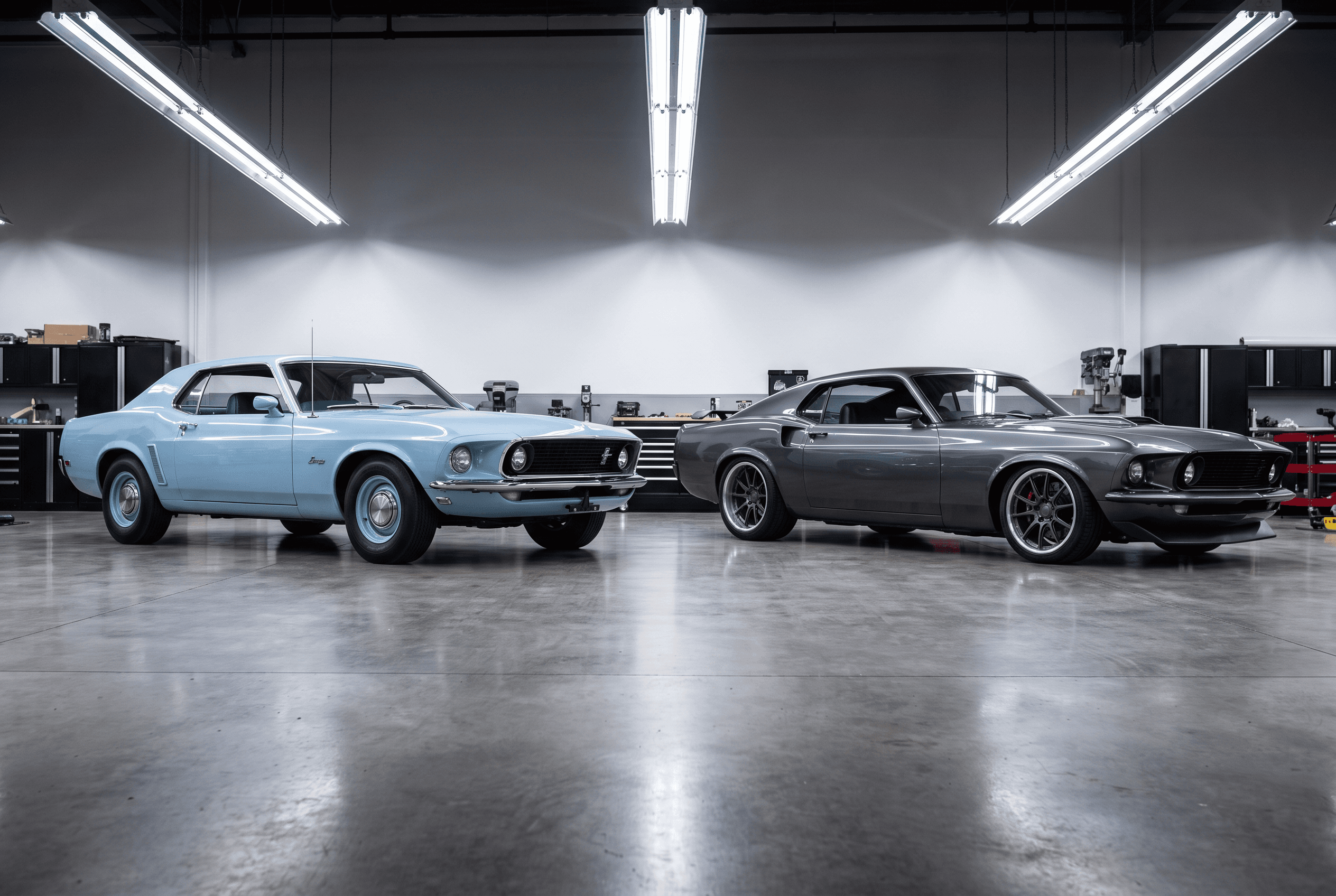
A restoration returns a car to the way it left the factory: correct parts, correct finishes, correct markings, and the driving experience that came with them. A restomod keeps the classic body and the look, then replaces the parts that make an old car feel old, usually the brakes, steering, suspension, engine management, transmission and comfort features. Neither one is the "right" answer. The right answer depends on the car you have, how you plan to use it, and what you want it to be worth when you're done.
This guide is about the decision itself. It covers what each path does to value and originality, the upgrades that separate them, how the budget behaves on each, where parts come from, and how each car is treated when it rolls onto a show field. If you've already made the call and need a framework for the work, our guide to planning a classic car restoration covers budgeting, phasing and timelines.
What Each Path Actually Means
"Restoration" covers a range. At one end is a concours restoration, where every clamp, decal and finish is what the factory used, and the car is judged against the way it was built. At the other is a driver-quality restoration that looks stock to a passerby but may carry a few service replacement parts. What they share is intent: the target is the original car.
"Restomod" is a range too. A mild one might add front disc brakes, radial tires and electronic ignition, and still look completely stock with the hood shut. A full build, often called pro touring, can carry a modern fuel-injected engine, an overdrive transmission, coilovers, big brakes behind large-diameter wheels, a new wiring harness and air conditioning. Some full builds start from an aftermarket chassis or a reproduction body shell rather than a factory one. The intent here is a classic that drives like a modern car.
In between sits a lot of real-world territory: a correct restoration with a hidden radio and better brakes, or a stock-looking car with a modern engine management system. The useful question isn't which label fits, but which direction each decision pushes the car.
Originality and Value
For a car whose value comes from what it is, originality is the asset. Numbers-matching drivetrains, factory option codes, original paint and documentation like a build sheet or window sticker are what collectors pay for on rare and high-value models. Remove the original engine, cut the floor for a new transmission tunnel or replace the factory subframe, and that value usually can't be put back, even if the parts are saved.
For a car whose value comes from how good it is, the math is different. A common model with a non-original engine, a rusted-out shell or no paperwork has less originality to lose, and a well-built restomod can be the more desirable car to many buyers. Restomods have become a fixture at major collector auctions for that reason.
Either way, don't plan on the build paying for itself. Hagerty's guidance on restoration costs is blunt: after a major restoration, unless the car is extremely rare, high-value or famous, it's highly unlikely you will recoup the cost. That applies to restomods with extra force, because a restomod's value depends heavily on build quality, the builder's reputation and documentation, and a buyer's taste may not match yours. Value a car before the work, then decide how much of the spend you're comfortable treating as the cost of enjoying it.
A practical rule: if the car is rare, numbers-matching or historically documented, lean toward restoration, or limit changes to bolt-on, reversible ones. If it's a common model that's already lost its originality, a restomod costs you little in collector value.
Drivability and Safety Upgrades
This is where the restomod case is strongest. A car designed in the 1960s often has drum brakes at all four corners, bias-ply tires, vague recirculating-ball steering, lap belts, and a single-circuit master cylinder, where one leak can take out the brakes at every wheel. US manufacturers moved to dual-circuit master cylinders around the 1967 model year ahead of the federal brake standard that took effect at the start of 1968, so many earlier cars still carry the single-reservoir design.
The upgrades that make the biggest difference, roughly in order of how often owners do them:
- Brakes: a dual-circuit master cylinder, then front disc brakes, often with a power booster. Brakes are the upgrade owners on both paths most often agree on.
- Tires: modern radials in place of bias-plies. Radials that mimic a period look, including whitewalls and redlines, exist for owners who want the grip without the visual change.
- Steering and suspension: quicker steering boxes or rack-and-pinion conversions, modern shocks, thicker sway bars, and, on full builds, coilovers and tubular control arms.
- Engine management: electronic ignition, then self-tuning throttle-body fuel injection that bolts onto a carburetor's mounting flange, or a complete modern engine swap.
- Transmission: an overdrive automatic or a five- or six-speed manual, so the engine isn't spinning hard at highway speed.
- Comfort and safety: three-point belts, air conditioning, better lighting and modern audio.
Note that a restoration doesn't have to mean living with every original weakness. Many owners restore a car correctly and add a dual-circuit master cylinder or modern tires for the drive to the show, keeping the original parts to refit for judging. That's a legitimate middle path, not a compromise of either one.
If an upgrade involves an engine swap, emissions equipment, lighting or seat belts, check your state's current rules before you buy parts. Inspection, emissions and equipment requirements vary by state and change over time, and some states look closely at engine swaps. Your state's motor vehicle or environmental agency is the place to confirm what applies to your car.
How the Budget Behaves
Both paths are expensive, but they get expensive in different places.
A restoration's costs concentrate in correctness and finish. Labor dominates: bodywork and paint to a show standard, plus the time spent sourcing, refinishing and detailing parts so they match what the factory installed. Correct parts for a rare model can cost far more than a modern equivalent, and hunting down one specific original piece can stall a project for months. The finish standard you pick, driver or show, is the biggest lever on the total.
A restomod's costs concentrate in engineering and integration. The parts are new and readily available, but they don't always fit together on the first try. A modern engine needs mounts, wiring, a fuel system that can feed injection, a cooling system that can handle it, and often a different exhaust and driveshaft. Bigger brakes may need larger wheels. Every system you modernize touches two or three others. Budget for fabrication time and for the parts you didn't know you needed until the first ones went in.
On both paths, the most common budget mistake is the same: starting work before deciding what the finished car is supposed to be. Pick the direction first, write it down, and test every purchase against it.
Parts Availability
For popular American classics such as early Mustangs, first-generation Camaros, Chevelles and Tri-Five Chevrolets, the reproduction parts market is deep enough that a full restoration can be done largely with new parts, and complete reproduction body shells exist for some of them. Those same cars have the widest selection of bolt-on restomod parts, which is one reason so many restomods are built on them.
For low-production models, orphan brands and many imports, the picture flips. Correct parts may only exist as new old stock or used originals, and restomod parts may need to be adapted from other applications or fabricated. Before committing to either path on an unusual car, find the marque club or specialist vendors and confirm the parts you'll need actually exist.
Whichever way you go, keep every original part you remove, bagged, tagged and stored dry. A set of stackable parts storage bins and a roll of labeled resealable parts bags cost little next to what an original carburetor, intake or radio is worth to the next owner, or to you if you ever change your mind.
How Each Path Is Judged at Shows
This is where the two paths diverge most clearly. Originality-focused judging scores a car against how it was built. The National Corvette Restorers Society, for example, awards its Top Flight to cars that score at least 94 percent against factory originality standards. The Mustang Club of America judges its Concours, Thoroughbred and Unrestored classes against a standard of perfection, and runs separate Modified classes where owners submit a list of their modifications to the judging team. A restomod entered in an originality class loses points it never had a chance to keep.
Restomods have their own top-tier stage. Goodguys' Street Machine of the Year, for instance, rewards build quality, performance and current style, and its finalists are judged partly at the autocross. Many local shows and cruise-ins split classes by stock and modified, or simply judge quality of work regardless of how original it is.
The takeaway: decide where you want to show the car before you build it, read those events' class rules, and enter the class that matches the car. Our guide to cruise-ins vs judged car shows explains how classes and scoring work, and our car show calendar lists events near you, many with their class lists posted.
Questions That Settle the Decision
- Is the car rare, numbers-matching or documented? If yes, restoration or reversible upgrades protect what makes it valuable.
- How will you use it? Long highway drives, summer heat and traffic favor modern brakes, cooling, overdrive and air conditioning. Occasional shows and short cruises favor originality.
- What does the original drive like? Drive a stock example before deciding. Some owners love the period experience; others find it tiring after an hour.
- Where will you show it? Originality judging and modified classes reward opposite choices.
- How long will you keep it? A car built to your taste is worth the most to you. If you may sell within a few years, broad appeal matters more.
- Can the changes be undone? Bolt-on, reversible upgrades keep both doors open. Cut metal closes one.
Insure the finished car for what it's actually worth, too. A restomod's value isn't easy to look up, so documentation and an agreed value policy matter more; our explainer on agreed value vs stated value insurance covers how that number gets set.
Frequently Asked Questions
Does a restomod increase a classic car's value?
Sometimes, but rarely by as much as the build cost. On a common car that has already lost its originality, a well-built, documented restomod can be worth more than a stock example. On a rare or numbers-matching car, modifications usually lower its collector value.
Is a restomod cheaper than a restoration?
Not reliably. A restoration spends on correct parts and finish labor, while a restomod spends on new components and the fabrication needed to make them work together. Either can run from modest to very expensive depending on the finish standard and how much of the car is changed.
Can I restore my car and still add modern brakes?
Yes. Many owners add a dual-circuit master cylinder, disc brakes or radial tires for safety while keeping the original parts to refit for originality judging. Bolt-on upgrades that use factory mounting points are the easiest to reverse.
Can a restomod be entered in a car show?
Yes. Most local shows have modified classes or judge quality of work regardless of originality, and some national events give their top awards to modified cars. Avoid entering a restomod in a stock or originality class, where it will be scored against factory specifications.
Keep Reading
Find Your Next Car Show
Browse hundreds of upcoming shows, cruise-ins, and meets near you.
Browse Events