
How to Show Your Classic Car in Cool Fall Weather (Without Damaging It)
Fall shows bring cooler air, thinner crowds, and a few real risks summer showing doesn't: cold starts, road salt, wet leaves, and wind. Here's what actually changes.
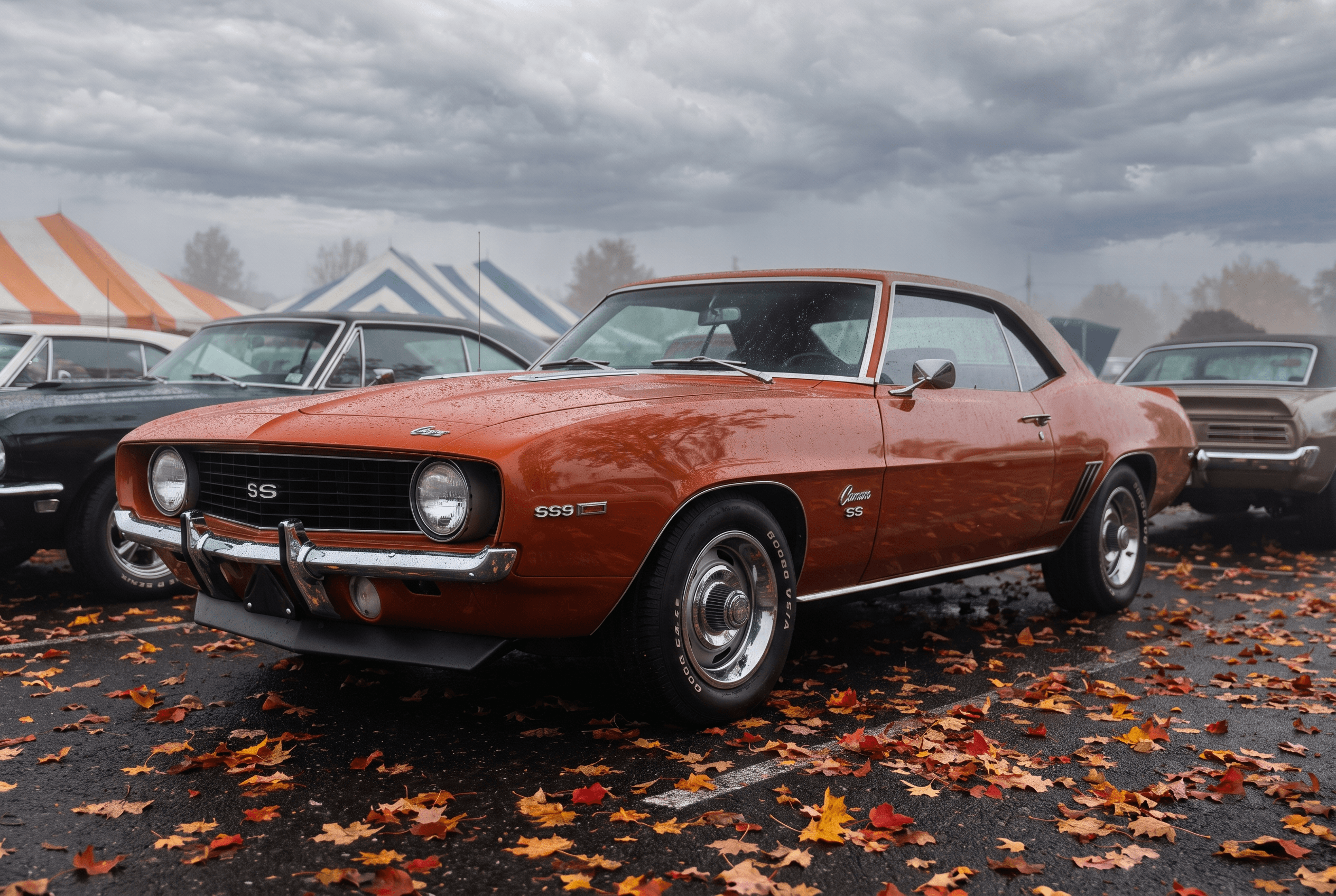
Fall is arguably the best stretch of the car show calendar: cooler air, changing leaves, and a noticeably thinner crowd of fair-weather owners who put their cars away the moment a jacket comes out. But showing a classic once temperatures drop into the 40s and 50s isn't just summer showing with a sweater on. Cold starts get harder, tire pressure drops on its own, wet leaves and road salt residue start showing up on pavement, and a canopy that stood fine in July wind can turn into a real problem in an October gust.
None of that means fall shows aren't worth it, in much of the country they're the best-attended, best-weather events of the year. It just means a few extra steps before you leave the driveway and a couple of adjustments once you're on the field. Here's what actually changes and what to do about it.
Cold-Starting Your Classic Before You Even Leave the Driveway
If your classic still runs a carburetor, cold mornings mean the choke is doing more work than it did all summer. Tap the throttle once before cranking, this sets the choke plate and engages the fast idle cam, then start the car without pumping the pedal again. Let it idle at that higher RPM for two to three minutes before you touch the throttle; revving it or blipping the gas during warm-up releases the fast idle cam early and works against the point of the choke in the first place. Once it's idling smoothly on its own, you're good to pull out.
Cold weather is also hard on the battery, even one that's been reliable all summer. A battery's cranking power drops sharply as the temperature falls, and the engine needs more cranking amps to turn over cold, thickened oil at the same time, a bad combination on a 40-degree show morning. If your battery is more than three or four years old, a quick load test before fall show season starts beats finding out it can't handle a cold start in a parking lot full of people watching.
Watch Your Tire Pressure — Cold Air Changes the Math
Tire pressure tracks air temperature closely: for roughly every 10°F the temperature drops, a tire loses about 1 PSI. A tank of air set correctly on a 75°F September afternoon can read several PSI low by the time an October show morning starts in the 40s. Check pressure cold, before the drive, with a digital tire pressure gauge, and top off with a portable 12V tire inflator if needed. Underinflated tires on a classic aren't just a handling issue, they change the sidewall's contact patch and stance, which judges in a stock or original class will notice.
Road Salt and Wet Leaves: Two Fall Threats to Your Paint
Depending on your region, fall is when the first light salt or brine applications start showing up on roads well before the first real snow, some states pre-treat ahead of an early frost. Salt residue left on paint and in the undercarriage begins corroding within two to three days, so if you drove through any treated roads on the way to a show, plan to rinse the car, especially the wheel wells and undercarriage, within a few days rather than letting it sit on the trailer or in the driveway.
Wet fallen leaves are the other seasonal hazard, and they're worse than most owners expect. Leaves release tannins and organic acids as they break down, especially once they're wet, and oak, maple, and aspen leaves are among the more acidic culprits. Left sitting on paint overnight, that acidity can etch into the clear coat and leave a stain that buffing alone won't fully remove. If you're parked under trees at a show or staging area, do a quick wipe-down with waterless wash spray before you leave rather than letting anything sit through the drive home.
Bracing Your Canopy and Display for Fall Wind
Fall brings more wind than peak summer in most regions, and a pop-up canopy that never budged at a still July show can lift or tumble in a stiff October gust. For a standard 10x10 canopy, the baseline recommendation is around 40 pounds of weight per leg in normal conditions; in moderate wind (10-15 mph) bump that to 40-50 pounds per leg, and in stronger gusts (15-25 mph) plan for 60-75 pounds per leg. Canopy leg weight bags are easier to transport and fill on-site with sand or water than hauling loose sandbags, and they store flat in a trunk between shows. If the forecast calls for real wind, stake it if the venue allows stakes, and skip the canopy sidewalls, they act like a sail and multiply the load on every leg.
Cold-Weather Detailing: What Changes When the Temperature Drops
Traditional carnauba and paste waxes are formulated to go on in the 60-80°F range, out of direct sun. Apply below that window and the wax can go on streaky, cure unevenly, or be nearly impossible to buff off cleanly. If you're detailing for a fall show and the garage or driveway is cooler than that, move the work indoors if you can, or switch to a spray wax or quick detailer designed for a wider temperature range instead of fighting a paste wax in 45-degree air. Whatever you use, do the wash and wax the night before in a controlled space rather than the morning of, cold hands and a cold hood are a bad combination for a clean finish.
Dressing the Part: Comfort Gear for a Cool Show Day
Shows that ran six to eight hours comfortably in a t-shirt in July ask more of you once the morning starts in the 40s and the afternoon only climbs into the 60s. Layer instead of relying on one heavy jacket, you'll want to shed a layer once the sun is up and add it back once it dips behind clouds. A insulated thermos of something hot goes further at a fall show than the cooler that was essential all summer, though it's still worth bringing water. Folding camp chairs with a solid back matter more too, standing around for hours is a different experience at 48°F than at 85°F.
When Fall Show Season Actually Ends (Regional Timing)
How late fall shows run depends heavily on where you are. In the Upper Midwest and Northeast, outdoor show season effectively winds down by late October or the first hard freeze, whichever comes first, Michigan's car show calendar thins out noticeably once the big Woodward-season crowds move indoors. In the mid-South and along the coasts, comfortable outdoor shows can run into November or later. Rather than guessing, check the listing for your specific show, organizers in colder regions increasingly note expected conditions and any weather contingency plans directly in the event description. Once your own local season wraps, that's the point to think about winterizing the car for storage rather than squeezing in one more cold-weather outing.
Frequently Asked Questions
What temperature is too cold to drive a classic car to a show?
There's no universal cutoff, most classics can be driven safely well into the 30s and 40s°F if they're mechanically sound and warmed up properly. The bigger concerns at that point are road salt exposure and cold starts, not the cold itself damaging the car.
Should I trailer my classic car to fall shows instead of driving it?
Trailering avoids road salt, wet leaves, and cold-start wear entirely, and many owners switch to trailering once temperatures drop and treated roads become more common. It comes down to personal risk tolerance and how far the show is from home.
How do I keep wet leaves from staining my car's paint at a show?
Avoid parking directly under trees when you have a choice, and wipe the car down with a waterless wash or quick detailer before leaves have a chance to sit and decompose on the paint overnight.
Do I need a canopy at a fall car show?
It's optional, but useful for both shade earlier in the day and light rain, common in fall. If you bring one, weight it properly for the wind, a canopy that isn't weighted for fall gusts is more likely to cause damage than help.
Is it bad for a carbureted classic to skip warm-up after a cold start?
Yes, driving off immediately after a cold start means the engine is running rich and the oil hasn't had time to circulate fully. Two to three minutes of idle at fast idle speed before driving reduces wear significantly.
Find a Fall Show Near You
Cooler weather and thinner crowds make fall one of the best times to show a classic, as long as you plan around what actually changes. Browse upcoming car shows or check what's happening this weekend to find your next one before the season wraps up.
Keep Reading
Find Your Next Car Show
Browse hundreds of upcoming shows, cruise-ins, and meets near you.
Browse Events