
How to Photograph Your Classic Car Like a Pro
Great car photos come down to light, angle, and background, not expensive gear. Here's how to shoot yours like a pro.
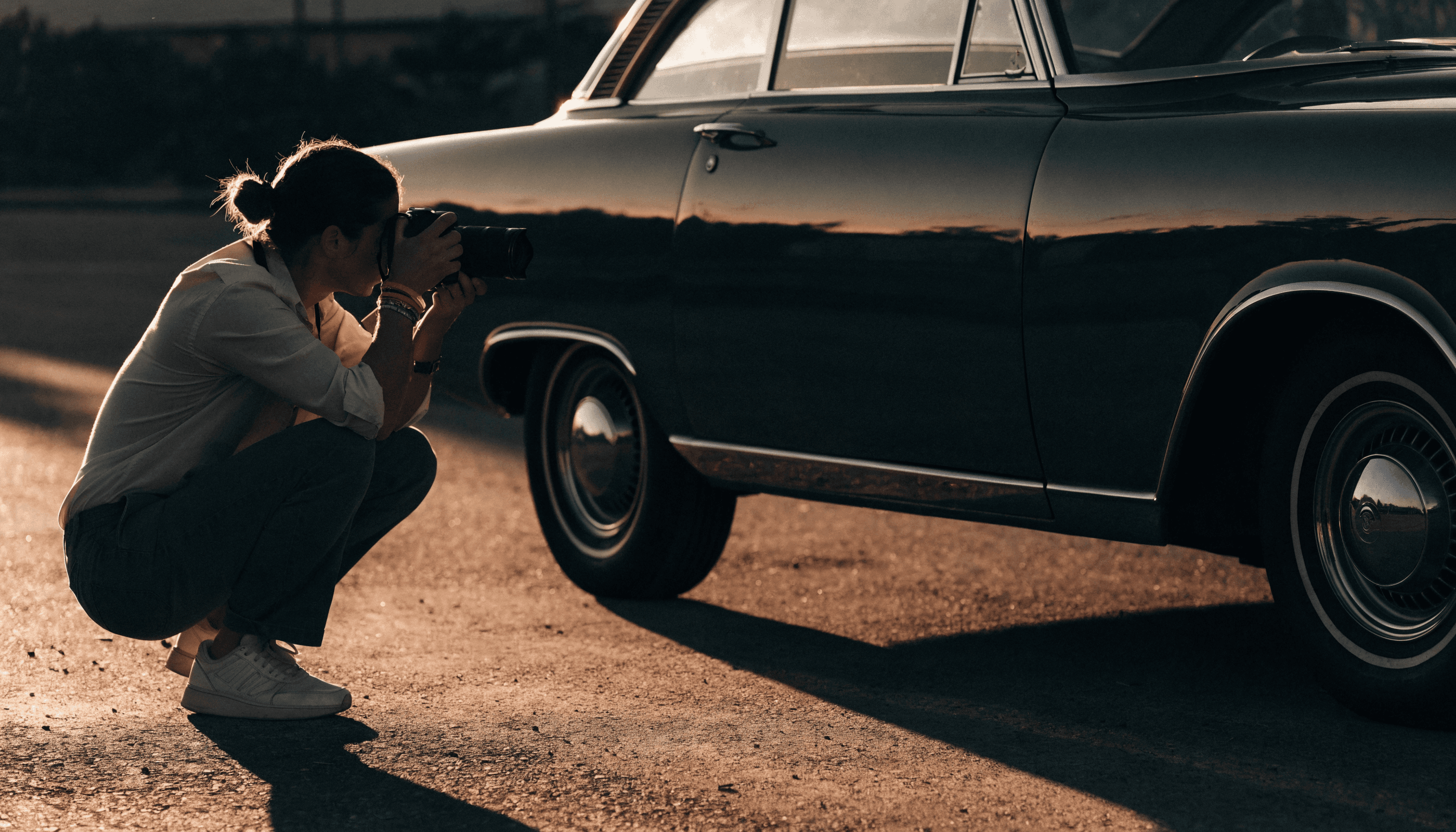
You don't need a $3,000 camera to get car photos that stop the scroll. Most of what separates a flat, forgettable shot from one that gets saved and shared comes down to three things: light, angle, and background. Here's how to use all three, whether you're shooting with a DSLR or your phone.
Shoot During Golden Hour
The hour after sunrise and the hour before sunset give you soft, warm, directional light that flatters curves and paint alike. Midday sun is harsh and creates blown-out highlights on chrome and hoods. If a show runs all day, plan your "hero shot" for the early morning before crowds arrive or the last hour before it wraps.
Get Low
Shooting from eye level makes cars look smaller and less dramatic. Crouch down, even get down on one knee, so the camera is closer to bumper height. This exaggerates the car's stance and makes it look lower, wider, and more aggressive, which is almost always more flattering.
Shoot the Classic Three-Quarter Angle First
Standing at the front corner of the car, angled so you can see both the full length of the side and the front fascia, is the most universally flattering angle for almost any car. It shows off the car's proportions in a way that straight-on front or side shots can't. Get this shot first, then experiment.
Watch Your Background
A stunning car in front of a cluttered parking lot, porta-potties, or a row of minivans loses most of its impact. Look for a clean line: a tree line, an open field, a plain wall, or simply other show cars in soft focus behind yours. Small changes in position, a few steps left or right, often make a huge difference.
Use a Tripod or Stabilize Your Phone for Detail Shots
For close-ups of badges, gauges, or engine bays, a steady shot matters more than a fancy camera. A small phone tripod or even resting your phone on a jacket lets you shoot at a slower shutter speed without blur, useful in the lower light of an engine bay or interior.
Don't Skip the Details
The wide hero shot gets the likes, but detail shots, a badge, a stitched seat, a set of gauges, a reflection in the paint, are what make a photo set feel complete and are often what build-thread and forum audiences actually want to see.
Basic Editing Goes a Long Way
You don't need Photoshop. Free apps handle 90% of what a car photo needs: straighten the horizon, bump contrast slightly, and pull back any blown-out highlights on chrome. Avoid heavy filters, they date quickly and often clash with paint color.
Bring a Reflector for Harsh Midday Light
If you're stuck shooting at noon, a collapsible 5-in-1 reflector can bounce light into shadowed areas like wheel wells and the underside of the hood, evening out the harsh contrast.
Phone Camera Settings That Actually Matter
Modern phones shoot 90% of the car photos on the internet. Set yours up right:
- Turn on the grid. Put the car on a third-line instead of dead center, and use the grid to keep the horizon level, a tilted horizon is the most common giveaway of a rushed shot
- Tap to focus on the car, then drag exposure down slightly. Phones tend to overexpose bright paint and blow out chrome; pulling exposure down a touch saves the highlights
- Skip the wide-angle lens up close. The 0.5x lens warps body lines badly at short distances. Step back and use 1x or 2-3x, the mild telephoto compression flatters car proportions the way pro lenses do
- Shoot in the highest quality your phone offers if you ever want prints, you can always compress later
Shooting at a Crowded Show
Show fields are the hardest environment: harsh midday light, crowds, and clutter. Work with it:
- Arrive at gates-open or stay through the last hour, empty field plus golden light is when the hero shots happen
- Shoot tight when you can't shoot clean: details, badges, reflections, and interiors ignore the crowd entirely
- Use spectators deliberately or not at all, a person mid-frame walking through ruins a shot, but a silhouette admiring the car from behind can make one
- For engine bays, block direct sun with your body or wait for cloud cover, even light beats bright light on mixed metal and plastic
The Five-Minute Edit
In any free editor: straighten the horizon, crop to remove clutter at the edges, drop highlights to recover chrome and sky, lift shadows slightly under the bumper and wheel wells, add a small bump of contrast, and stop. If the paint color no longer looks like the paint color, you've gone too far, fellow owners always notice.
Frequently Asked Questions
What's the best time of day to photograph a car?
The hour after sunrise and before sunset ("golden hour"). Overcast days are the underrated second choice, clouds act as a giant softbox and eliminate harsh reflections, great for detail and interior shots.
How do I photograph a black or dark-colored car?
Dark paint is a mirror, it shows whatever is around it. Position the car so it reflects open sky rather than buildings or crowds, shoot at golden hour, and underexpose slightly. A clean dark car reflecting a sunset sky is one of the best shots in the hobby.
How do I get the wheels to look right in photos?
Roll the car forward or back so the valve stems and spokes sit where you want them, and on the classic three-quarter shot, turn the front wheels slightly toward the camera so the face of the wheel shows instead of a dead-on tread shot.
Do I need to edit photos before posting?
Thirty seconds of straightening and highlight recovery separates your shot from the two hundred other phone photos taken of the same car that day. Heavy filters, though, date instantly, aim for "what it actually looked like, on its best day."
Put the Photos to Use
Once you've got a shot you're proud of, use it on your registration profile, build thread, or social posts, and go find the next show to shoot at. See what's happening this weekend near you.
Keep Reading
Find Your Next Car Show
Browse hundreds of upcoming shows, cruise-ins, and meets near you.
Browse Events