
Car Show Display Ideas: How to Set Up a Spot That Gets Noticed
A clean car gets people to slow down. A well-staged display is what makes them stop, read, and remember your car when the ballots come out. Here's how to build one.
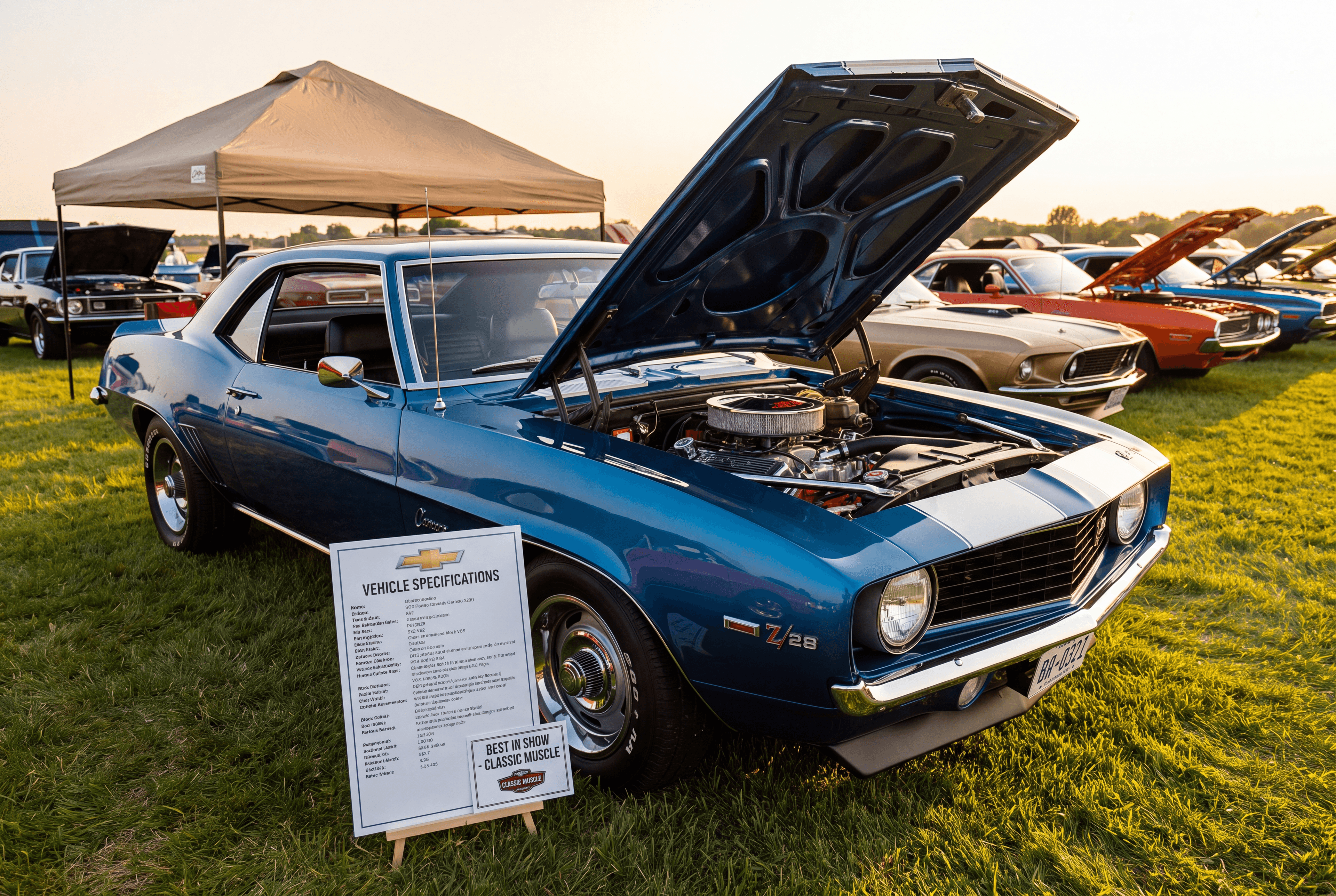
A spotless car gets people to slow down. A well-staged display is what makes them stop, read, walk around the car twice, and actually remember it when the People's Choice ballots come out. Most owners pour a weekend into detailing and then park the car with nothing else, no sign, no story, no reason for a stranger to linger. That's the gap this guide closes.
Good car show display ideas do three jobs at once: they answer the questions everyone silently asks ("what year, what engine, is it original?"), they make the car easy and comfortable to look at, and they show that the owner cares about the details. Here's how to put together a display that works whether you're at a small cruise-in or a judged national, built around gear that packs into a single tub in your trunk.
Start With the Ground: Your Footprint and How the Car Sits
Before any props, think about how the car occupies its space. Angle matters: if the field lets you, nose the car out at a slight angle rather than straight-in so people can take in the front three-quarter view, which is the most flattering angle on almost any car and the one every photographer wants. Leave the wheels turned slightly toward the crowd to show off the wheel face and brake detail instead of a flat sidewall.
Define your space so people know where to stand. A set of show-day essentials should include collapsible traffic cones or low stanchions at the corners, which quietly keep strollers and loose kids from leaning on your paint without you having to say a word. If you run your car low, carry rubber wheel chocks so you can park on a slope without leaving it in gear all day, and a scrap of clean carpet or a display floor mat under the front of the car reads as intentional and gives an engine-bay display a clean backdrop.
The Display Board: Tell People What They're Looking At
The single highest-impact item you can add is a spec board. Nine out of ten conversations at a show start with the same questions, and a board answers them before you even look up from your chair. Keep it to one clean page: year, make, model, engine and drivetrain, a one-line note on originality or the build (numbers-matching, frame-off restoration, LS swap, whatever the honest story is), and two or three lines of build history or trophies if you have them.
Presentation counts. Print it large enough to read from six feet, mount it in a weighted acrylic sign holder so a gust doesn't send it skidding under the next car, and slip the page in a sheet protector or laminate it against dew and spills. A small easel stand on a folding side table works too, and gives you a spot for a photo album of the build. If the car has an interesting before-and-after, a couple of restoration photos in a small frame does more to sell the work than any amount of talking. For a real-world example of a build story that pulls people in, see the Member Spotlight on PURTEGGYPUL's Integra GSR, whose trophy case and build history are exactly the kind of detail a strong spec board should surface.
Open It Up: Engine Bay, Trunk, and Interior Staging
An open hood is an invitation, but a propped hood with a dull engine bay undersells the car. Wipe the bay down with a detailing spray and microfiber towels once the engine has cooled, dress the hoses and plastics lightly (heavy, greasy shine looks cheap and drips), and if the show runs into evening, a set of battery-powered LED puck lights tucked out of sight lifts the whole bay and draws eyes after dark.
Stage the interior with the doors closed but unlocked-looking: windows down a few inches, seats clean, floor mats straight. A period-correct detail on the seat, an original owner's manual, a vintage road atlas, a toolkit in the trunk, gives people a small story to notice. Pop the trunk if it's clean and shows off a spare tire setup or a restored floor. The goal is to reward the person who walks all the way around instead of glancing and moving on.
Shade, Comfort, and Surviving a Full Show Day
You'll be next to that car for six to eight hours, and a miserable owner slumped in the heat doesn't sell anything. A 10x10 pop-up canopy is the workhorse of any serious display, but check the show rules first, some judged shows and indoor venues ban canopies, and many outdoor shows require you to weight the legs rather than stake them on turf. Bring canopy weight bags filled with sand for exactly that reason; a canopy that takes flight in an afternoon gust is a real hazard to the cars around you.
Round out the comfort kit with a folding camp chair, a rolling cooler of water and snacks, and a portable power bank so your phone survives a day of photos. In peak summer heat, shows across the South, from a July cruise-in in Texas to a Gulf-coast meet, will cook you and the car alike; a windshield sun shade protects the dash during the hours the car is closed up, and it slips out in thirty seconds when a judge or crowd comes through.
Small Touches That Win People Over (and Sometimes Votes)
At a People's Choice show, votes go to the cars people connect with, not always the most expensive builds. A dish of wrapped candy on a fender towel is a cliche because it works, it stops families and starts conversations. A small stack of business cards or printed info cards with the car's details and your social handle turns a passing admirer into someone who follows the build. If your club or car has a name, a simple banner or windshield card ties the display together.
Keep a clean fender cover or two draped over the towel bar of your setup, both to protect the paint when you lean in and as a signal that this is a cared-for car. Coil your extension cords, hide your cooler behind the canopy leg, tuck the trash bag out of sight. The difference between a display that looks staged and one that looks cluttered is almost entirely about hiding the logistics.
Consistency at the field matters as much as any single prop. Scott Starbuck's Hellcat Redeye "Destroyer" picked up four Kansas trophies by showing up prepared to roughly three events a month rather than chasing one big show a year.
What Not to Do
A few habits actively cost you. Don't rope the car off so aggressively that people can't get close, curiosity is the whole point, and a car nobody can approach gets no votes. Don't over-shine everything into a wet, greasy look; judges and experienced enthusiasts read it as hiding flaws. Don't leave a handwritten "DO NOT TOUCH" sign as your only signage, it reads as hostile; a polite "Please look, no touching, thanks!" line at the bottom of your spec board does the same job without the attitude. And never block a neighbor's display or spill your setup into their space; show etiquette is a small world and organizers remember.
Setting Up: A Show-Morning Timeline
Give yourself margin. Aim to be staged at least 30 to 45 minutes before gates open to the public. The order that works: park and position the car first, then let it cool while you set the canopy and weights, then do your final wipe-down once the panels aren't hot, then pop the hood and place your board and props last so they don't get bumped during setup. Take your own walk-around from ten feet back before the crowd arrives, that's when you'll notice the crooked floor mat or the price tag still on the new cone. For more on packing the night before, run through the full car show day checklist so nothing critical stays home.
Frequently Asked Questions
What should I put on a car show display board?
Keep it to one readable page: year, make, and model up top, then engine and drivetrain, a one-line originality or build note (numbers-matching, restomod, engine swap), and two or three lines of build history or trophies. Add a small before-and-after photo if you have one. Print it large enough to read from six feet and weight it so it doesn't blow away.
Are canopies allowed at car shows?
It depends on the show. Many outdoor cruise-ins allow them but require weighted (not staked) legs on turf, while some judged shows and indoor venues ban them entirely because they interfere with sightlines and photography. Always check the event rules before you load one, and bring sand weight bags rather than assuming you can drive stakes.
Should I open the hood at a car show?
Usually yes, an open hood invites people in and is expected at judged shows where the engine bay is scored. The exception is if the bay isn't detailed or the engine is still hot; a dull or ticking-hot engine bay undersells the car. Let it cool, wipe it down, and consider hidden LED lighting for evening shows.
How do I get more votes at a People's Choice show?
Make the car easy to connect with. A clear spec board answers people's questions, an open and approachable setup invites them close, and small human touches, candy for the kids, info cards, a build photo album, make people linger and remember your car when they fill out the ballot. Connection beats budget more often than owners expect.
What is the most important thing to bring for a car show display?
If you can only add one thing beyond the car itself, make it a spec/display board. It does the most work of any single item, answering the questions every passerby has and letting your car sell itself even while you're grabbing lunch. After that, shade and a chair keep you comfortable enough to actually enjoy the day.
Find Your Next Show
Got the display dialed in? See what car shows are happening this weekend and put it to use.
Keep Reading
Find Your Next Car Show
Browse hundreds of upcoming shows, cruise-ins, and meets near you.
Browse Events